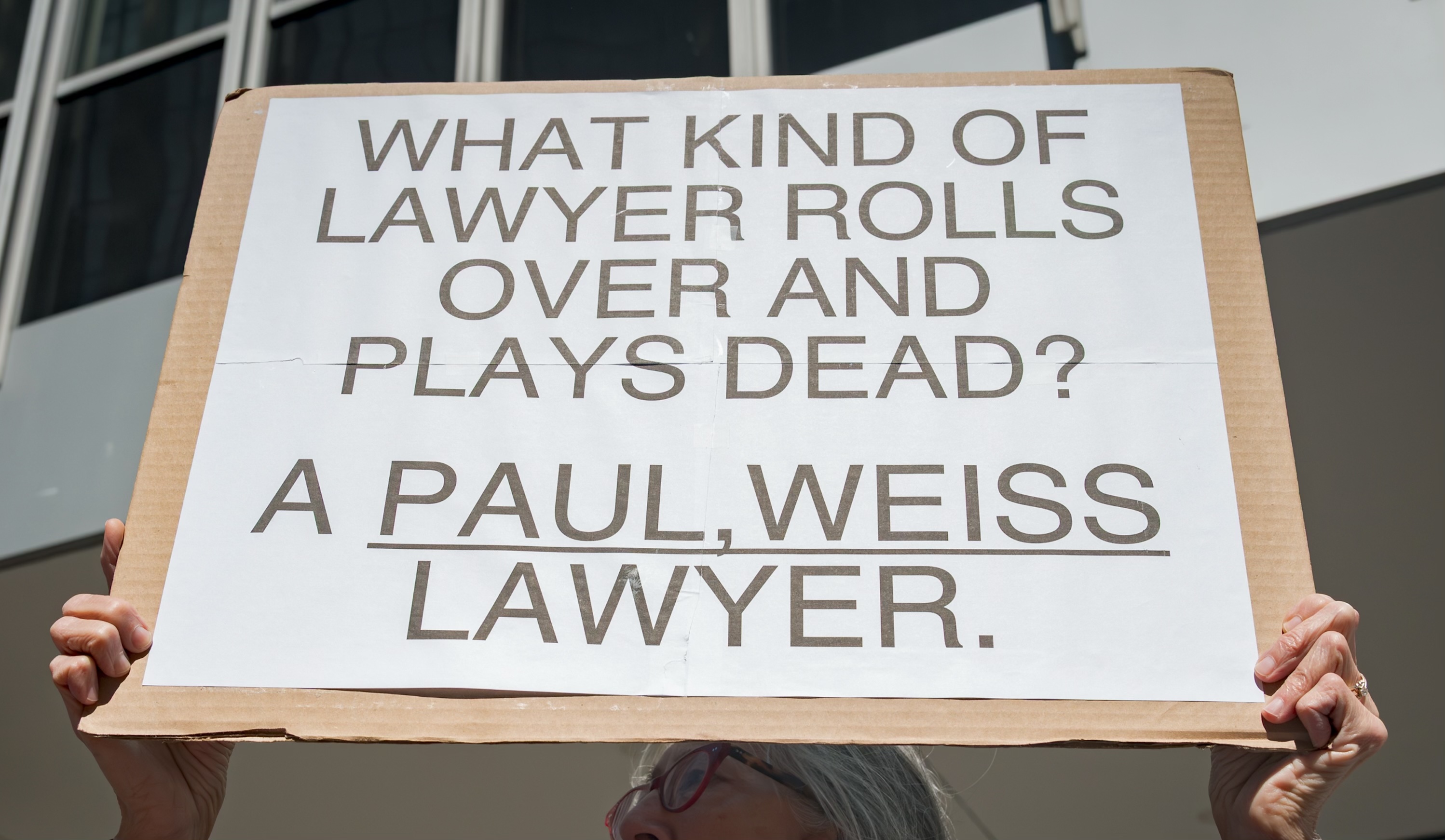
Last month, the law firm of Paul Weiss struck a deal with the White House, promising to donate $40 million in pro bono legal services to Trump-approved causes in order to avoid a cartoonishly unconstitutional executive order targeting the firm and its clients. Shortly thereafter, the firm’s chair, Brad Karp, assured any Paul Weiss lawyers feeling wary about getting conscripted to fight the Republican Party’s culture wars that—great news!—they had nothing to worry about.
“To be clear, and to clarify misinformation perpetuated from various media sources, the Administration is not dictating what matters we take on, approving our matters, or anything like that,” Karp wrote in a firmwide email. “We obviously would not, and could not ethically, have agreed to that.” Instead, he wrote, Paul Weiss would merely work on three specific “areas of shared interest” with the administration: “assisting our Nation’s veterans,” “countering anti-Semitism,” and “promoting the fairness of the justice system.” Otherwise, he said, Paul Weiss would “continue all of the existing pro bono work we already do.”
In a development that will surprise no one except, apparently, Brad Karp, the Trump administration understood his terms of surrender much differently. According to
The New York Times, the president has privately suggested in recent weeks that he has the authority to deputize Paul Weiss, along with other firms that waved the white flag, to hash out trade deals on the administration’s behalf, provide support to Attorney General Pam Bondi’s Justice Department, or assist the Department of Government Efficiency gremlins working to dismantle the parts of government that make Elon Musk marginally less wealthy. White House officials have even floated the possibility of tasking these firms with providing free legal counsel to Trump and/or his allies should they become “ensnared in investigations,” which has been, historically speaking, a pretty safe bet.
Per the
Times, Paul Weiss was not the only firm whose leadership downplayed the significance of their capitulations when communicating the news internally. One, for example, told colleagues that the firm would remain “completely free” to choose whether to work on “any particular pro bono matter,” and another characterized the subjects of the contemplated pro bono collaborations as causes that the White House and the firm “both support.”
